
Food & Agribusiness
Industry Overview
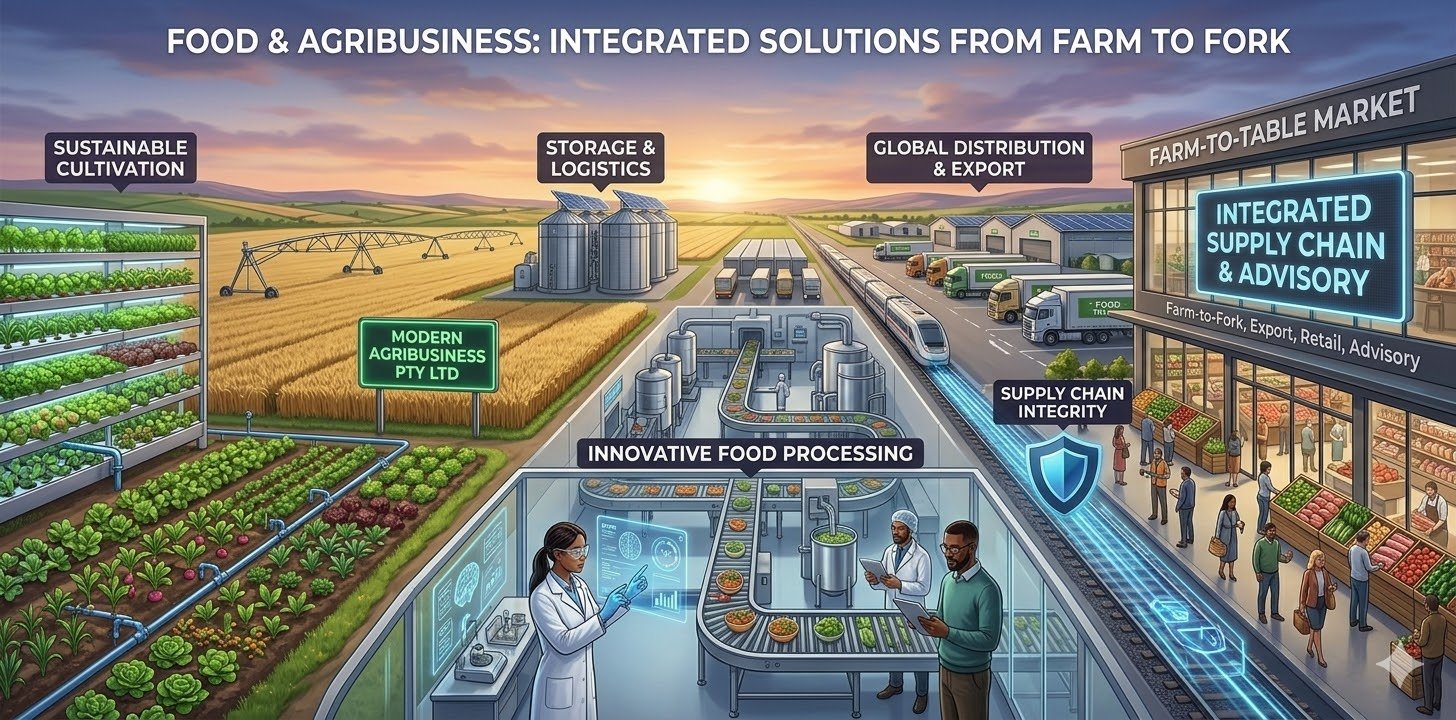
Agriculture remains fundamental to Australia's economy and export profile — from broadacre cropping and livestock in South Australia to horticulture, viticulture, and dairy across the country. The food supply chain extends from primary production through processing, distribution, and retail. Each stage carries its own commercial pressures, regulatory requirements, and tax treatment.
Tax treatment of primary producers is distinct — averaging provisions, farm management deposits (FMDs), accelerated depreciation for water and fencing, and drought-related concessions create a unique compliance environment. Many agricultural operations are family-owned, often structured through trusts or partnerships, with succession planning being a critical consideration that affects both the current generation and the next.
Seasonal cash flow, commodity price exposure, and weather dependency add commercial complexity. These factors influence everything from the timing of income recognition and livestock valuation methods to the structuring of insurance arrangements and government assistance. Getting the tax and accounting treatment right is not optional — it has a direct impact on financial outcomes.
Key Commercial & Regulatory Challenges
Primary Producer Tax Concessions
Income averaging, farm management deposits, accelerated depreciation for water facilities, fencing, and fodder storage — these concessions are available to eligible primary producers but require careful application. Eligibility criteria, deposit limits, and interaction with other tax provisions need to be assessed each year to ensure they are applied correctly and deliver the intended benefit.
Drought & Natural Disaster Relief
Tax treatment of government grants and subsidies, forced disposal of livestock, and insurance proceeds all require specific attention. The ATO provides concessions for forced disposal of livestock due to drought, flood, or disease, including the ability to defer income or spread it over future years. Each measure has its own conditions and time limits, and getting the treatment wrong can result in unexpected tax liabilities.
Family Farm Succession
Intergenerational transfer of farming operations is one of the most consequential decisions a farming family will make. CGT rollover relief for active assets, small business CGT concessions, and retirement planning all intersect in this process. Structuring the transfer correctly — whether through trusts, companies, or direct ownership — affects tax outcomes, asset protection, and the financial security of both the retiring and incoming generations.
GST on Food & Agriculture
GST-free food classifications, input-taxed supplies, wine equalisation tax (WET), and the interaction between primary production and GST create a compliance area that is more nuanced than many operators expect. The distinction between GST-free and taxable food products, the treatment of farm inputs, and the WET credit system for wine producers all require accurate classification and reporting.
Water Rights & Entitlements
Tax treatment of water entitlements, water allocations, and the sale or lease of water rights has become increasingly significant as the value of water has risen across the Murray-Darling Basin and other catchments. Whether water entitlements are treated as capital or revenue, how allocations are accounted for, and the CGT implications of disposing of water rights are all areas that require careful analysis.
Seasonal Workforce Compliance
Harvest worker visa compliance, casual and seasonal employment, piece-rate calculations, and superannuation for short-term workers present ongoing payroll and compliance challenges. The agricultural sector relies heavily on seasonal labour, and the rules around working holiday maker tax rates, labour hire arrangements, and the correct application of the Horticulture Award add layers of complexity to workforce management.
How We Support This Industry
Our work for food and agribusiness clients draws on our full range of services — tax, accounting, bookkeeping, payroll, and business advisory — applied to the specific regulatory and commercial context of primary production and the broader food supply chain.
SMSF Setup, Tax & Audit
SMSF establishment and compliance for agricultural producers and agribusiness owners.
Learn moreCompany Setup & Compliance
Company registration, tax returns, bookkeeping, payroll, BAS, and FBT for agribusiness companies and processors.
Learn moreIndividual Tax & Financial Services
Individual and company tax returns, primary producer concessions, and finance services for farming families.
Learn moreFinancial Planning
Retirement planning, wealth management, and superannuation advice for primary producers and agribusiness owners.
Learn moreTrust Formation & Tax
Trust formation, administration, and tax compliance for farming families and agricultural investment structures.
Learn moreSmall Business & Audit
Small business advisory, compliance, and audit services for food producers and agribusiness operators.
Learn moreLegal Business Advice
Entity structuring, partnership arrangements, and succession planning for farming families and agribusinesses.
Learn moreWho We Work With
Our food and agribusiness advisory work covers a range of operators and participants across the agricultural supply chain:
Broadacre & Livestock
Cropping, sheep, cattle, and mixed farming operations. Tax compliance, income averaging, livestock valuation, and succession planning for family-run properties across South Australia and beyond.
Horticulture & Viticulture
Fruit, vegetable, and wine grape growers. Seasonal cash flow management, WET compliance for wine producers, GST on fresh produce, and workforce structuring for harvest periods.
Food Processing
Meat processing, dairy manufacturing, grain milling, and food production. Financial reporting, GST classification of processed food products, and manufacturing-specific tax considerations.
Agricultural Services
Farm management, agronomic services, and rural supply businesses. Business structuring, contractor compliance, and tax advisory for businesses that support the agricultural sector.
Agri-Investors
Agricultural land investors, water entitlement holders, and rural property trusts. CGT planning, investment structuring, and compliance for investors with agricultural assets.
Related Insights
Discuss Your Food & Agribusiness Advisory Requirements
Whether you operate in primary production, food processing, or agricultural services, we can discuss how our advisory capabilities apply to your specific situation.